Investing in assets like stocks and real estate can be rewarding, but understanding capital gains is imperative for managing your financial future. Capital gains refer to the profit you earn from the sale of your investments when they exceed your original purchase price. In this post, we will break down the different types of capital gains, tax implications, and strategies to maximize your returns, ensuring you navigate your investment journey with confidence and clarity.
Understanding Capital Gains
For every investor, grasping the concept of capital gains is fundamental to making informed financial decisions. Capital gains refer to the profit you earn from the sale of an asset, such as stocks or real estate, when the selling price exceeds the purchase price. Knowing how capital gains work enables you to strategize your investments effectively.
Definition and Types of Capital Gains
One way to categorize capital gains is by distinguishing between short-term and long-term gains:
| Type | Description |
| Short-Term Capital Gains | Gains on assets held for one year or less. |
| Long-Term Capital Gains | Gains on assets held for more than one year. |
| Realized Gains | Profits gained after selling an asset. |
| Unrealized Gains | Increased value of an asset you haven't sold. |
| Adjusted Basis | Original value of an asset, adjusted for depreciation. |
The classification you use can significantly influence your tax obligations and investment strategies.
Importance of Capital Gains in Investing
Capital gains play an integral role in your investment portfolio, as they represent your ability to generate wealth over time. Understanding how these gains accumulate can aid in making strategic choices regarding buying, holding, or selling assets.
And it's important to realize that capital gains not only impact your tax liability but also affect your overall investment strategy. By being aware of market trends and your time horizon, you can maximize your returns and manage the risks associated with different asset classes. An effective understanding of capital gains will empower you to achieve your long-term financial goals.
How Capital Gains are Taxed
Any investor should be aware that capital gains are subject to taxation. The taxable amount depends on various factors, including the duration the asset was held. For a comprehensive overview of how capital gains tax works, refer to this Capital Gains Tax: What It Is, How It Works, and Current ....
Short-term vs Long-term Capital Gains
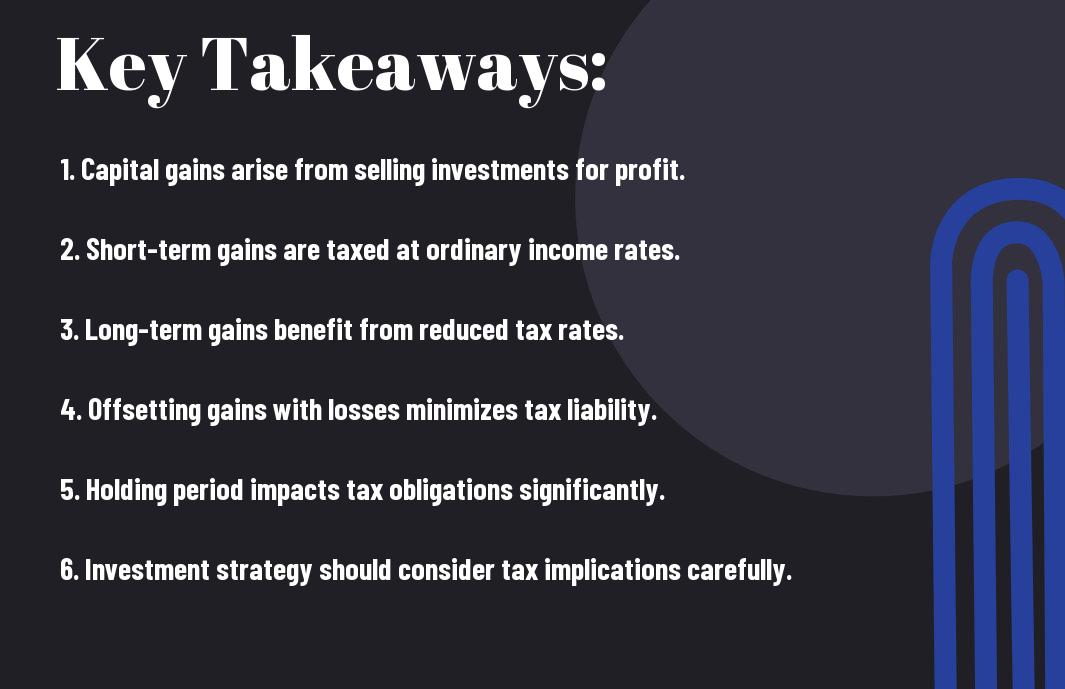
Across different types of capital gains, you will encounter short-term and long-term distinctions. Short-term capital gains arise from assets held for one year or less, while long-term gains are from assets held for more than one year. The tax implications can differ significantly based on these categories.
Capital Gains Tax Rates and Implications
One key point to understand is that the tax rates for short-term and long-term capital gains are not the same. Short-term gains are generally taxed as ordinary income, which can lead to higher tax rates depending on your taxable income. In contrast, long-term capital gains typically benefit from lower tax rates, incentivizing you to hold onto assets longer.
Short-term capital gains can be taxed at rates that mirror your ordinary income tax bracket, making it important for you to assess your overall tax situation. Long-term gains, however, are usually taxed at preferential rates, which can significantly reduce your tax burden if you plan your investments strategically. Understanding these rates can enhance your investment strategy and ultimately affect your net returns.
Strategies for Managing Capital Gains
Despite the complexities of capital gains taxes, there are effective strategies you can employ to minimize your tax liability. By understanding and using these techniques, you can make informed decisions that allow you to retain more of your hard-earned profits. Whether through tax-loss harvesting or timing your sales, taking a proactive approach will ultimately benefit your investment strategy.
Tax-Loss Harvesting
Against the backdrop of rising asset values, tax-loss harvesting allows you to offset capital gains by selling underperforming investments. By strategically realizing losses in your portfolio, you can reduce your overall tax burden while rebalancing your investments toward better-performing assets. This technique can be particularly useful in managing your taxable income and optimizing your investment returns.
Timing Your Sales
Timing your sales can significantly impact your capital gains tax liability. By understanding short-term versus long-term capital gains, you can strategically plan when to sell your investments to lessen the tax burden. Long-term capital gains are typically taxed at a lower rate, so holding onto an asset for over a year before selling can result in tax savings. Additionally, monitoring market trends and your financial situation will help you determine the best time to execute your trades, ensuring you maximize your returns while minimizing taxes.
A well-informed approach to timing your sales can enhance your investment's financial outcome. Consider factors such as market performance, your overall portfolio composition, and your personal financial goals. By aligning your selling strategy with these considerations, you can make smarter decisions that reduce capital gains taxes, leading to more significant profits in the long run.
Capital Gains in Different Investment Vehicles
Keep in mind that capital gains can differ significantly depending on the type of investment you make. Understanding how these gains are taxed and realized in various investment vehicles like stocks, bonds, real estate, and other assets can significantly affect your investment strategy and financial outcomes.
Stocks and Bonds
Around the world of stocks and bonds, you may find that capital gains arise from selling these investments for more than you initially paid. Stocks often yield higher volatility, potentially leading to substantial short-term gains, while bonds typically offer steadier, more predictable returns, resulting in capital appreciation over time.
Real Estate and Other Assets
Investment in real estate and other assets often brings unique opportunities for capital gains. Properties may appreciate over time as demand increases, and you can realize gains through sales or rental income. Moreover, specialized assets like collectibles or precious metals can also appreciate value, providing potential capital gains for savvy investors.
Assets like real estate require careful consideration of location, market trends, and property condition to maximize potential gains. When you invest in real estate, understanding local regulations and taxation policies is vital, as they can impact your overall returns. Additionally, improvements made to the property can further increase its value, providing further avenues for realizing substantial capital gains when you choose to sell.
Common Misconceptions About Capital Gains
Now, many investors fall prey to misconceptions regarding capital gains, which can lead to misunderstandings about their potential impact on investment strategies. You might believe that all capital gains are taxed at the same rate, or that only stocks incur these gains. Clearing up these myths is vital for making informed investment choices and optimizing your financial outcome.
Myths vs Reality
Around the world of investing, various myths circulate about capital gains, such as the idea that they only apply to frequent traders or that they are always incurred upon selling an asset. The reality, however, is that capital gains can apply to any appreciated asset, and they need to be recognized to understand their implications fully.
Understanding Capital Gains Distributions
To grasp capital gains distributions, you need to realize that it refers to the gains investors may receive from mutual funds or ETFs when underlying assets are sold for a profit. This can happen even if you haven't sold any holdings yourself.
About capital gains distributions, it's vital to recognize that they occur when fund managers sell securities within the fund and pass the gains onto you, the investor. As a result, you may receive a distribution reflecting these gains, which could lead to a tax liability despite not having realized any gains yourself. Understanding this concept helps you plan financially and anticipate potential tax consequences effectively.
Resources for Further Learning
Once again, expanding your knowledge about capital gains can help you make informed investment decisions. For a comprehensive overview, check out 10 Things You Should Know About Capital Gains, which offers valuable insights to enhance your understanding of this imperative topic.
Books and Articles
Along your learning journey, consider exploring specialized books and articles that focus on capital gains. These resources can provide deeper insights into tax implications and investment strategies, helping you navigate this complex financial terrain with confidence.
Online Courses and Tools
Around the internet, numerous online courses and tools are available to boost your knowledge of capital gains and investment strategies. These resources typically offer interactive content, quizzes, and practical examples, making it easier for you to grasp this important subject.
In fact, many online platforms offer structured courses from certified financial experts, allowing you to learn at your own pace. These courses often include downloadable resources and community forums for discussion, providing an engaging and supportive learning experience tailored to your needs. Whether you want an introductory course or in-depth training, you’ll find options that suit your level and goals.
Summing up
Upon reflecting, understanding capital gains is necessary for your investment strategy. By recognizing how capital gains tax impacts your profits, you can make informed decisions that align with your financial goals. Whether you plan to hold investments long-term or engage in short-term trading, effective tax planning will help you maximize your returns. Staying updated on regulations and strategies ensures you optimize your investment approach while minimizing your tax liabilities. Knowledge is your best asset when navigating the complexities of capital gains in your investment journey.
FAQ
Q: What are capital gains and how are they calculated?
A: Capital gains refer to the profit that an investor realizes when they sell an asset for more than its purchase price. The calculation is straightforward: subtract the asset's original purchase price (also known as the cost basis) from the selling price. For example, if you bought a stock for $1,000 and sold it for $1,500, your capital gain would be $500. It's important to note that capital gains can be classified as short-term (for assets held less than a year) or long-term (for assets held more than a year), which can affect the tax rate applicable to your gains.
Q: How do capital gains taxes work?
A: Capital gains taxes are taxes levied on the profit from the sale of assets or investments. The rate at which these gains are taxed depends on how long the asset was held before it was sold. Short-term capital gains, from assets held for less than a year, are typically taxed as ordinary income, whereas long-term capital gains, from assets held for over a year, are taxed at reduced rates, which can be 0%, 15%, or 20%, depending on your taxable income. It's important to keep detailed records of your purchase and sale transactions to accurately report gains and comply with tax obligations.
Q: Are there any strategies to minimize capital gains tax?
A: Yes, there are several strategies that investors may employ to potentially reduce their capital gains tax liability. One common approach is tax-loss harvesting, where investors sell losing investments to offset gains from winning ones, thus reducing the overall taxable income. Another strategy is to hold onto investments for longer than a year to benefit from lower long-term capital gains tax rates. Additionally, utilizing tax-advantaged accounts such as IRAs or 401(k)s can help defer or even eliminate capital gains taxes until withdrawal. Consulting with a financial advisor can provide tailored approaches based on individual circumstances.


0 Comments