Finance strategies can significantly impact your journey towards financial freedom, especially when tackling debt. This comprehensive guide will empower you to implement the Debt Avalanche Method, a highly effective strategy that prioritizes high-interest debts first, minimizing the total interest paid over time. With practical tips and a clear understanding of how to maximize this approach, you’ll find the support you need to regain control of your finances. For more insights, check out Debt Avalanche: Meaning, Pros and Cons, and Example.
Understanding Debt
To effectively manage your finances, it’s crucial to understand debt. Debt refers to the money you owe to lenders or creditors, which can accumulate interest over time, making repayment more daunting. Knowing the difference between good and bad debt is vital in developing a sound financial strategy.
Types of Debt
To effectively tackle your debt, it's important to categorize it correctly. Here are the main types:
- Secured Debt: Backed by collateral, like a mortgage or auto loan.
- Unsecured Debt: Not backed by collateral, such as credit cards and medical bills.
- Revolving Debt: Credit available to borrow repeatedly, like credit cards.
- Installment Debt: Fixed payments made over time, such as personal loans.
- Student Loans: Borrowed funds for education, which can have varied repayment terms.
This understanding helps you prioritize which debts to pay off first.
| Type of Debt | Description |
| Secured Debt | Backed by collateral, such as a home or car. |
| Unsecured Debt | No collateral required; relies on creditworthiness. |
| Revolving Debt | Borrowing where you can owe different amounts over time. |
| Installment Debt | Fixed payments over a set period. |
| Student Loans | Funds borrowed for educational purposes. |
Factors Contributing to Debt
Assuming you want to get a grip on your finances, it’s vital to identify the factors that can lead to accumulating debt. Some common contributors include:
- Unexpected medical expenses.
- Loss of income or unemployment.
- Excessive spending habits.
- Lack of financial planning.
- Pursuing lifestyle inflation.
Assume that by understanding these factors, you can better manage your expenses and reduce the risk of falling into debt.
A comprehensive grasp of factors contributing to debt can empower you to make informed financial choices. Key aspects to consider include:
- Income instability or loss.
- High costs of living and housing.
- Your spending habits and lifestyle choices.
- Absence of budgeting and financial awareness.
- Emergencies and unforeseen events outside your control.
Assume that addressing these factors will aid you in developing a robust plan for avoiding further debt.
The Debt Avalanche Method
Even if managing debt feels overwhelming, the Debt Avalanche Method offers a structured approach to eliminate your debts efficiently. By prioritizing high-interest debts first, you can save money on interest while making faster progress. For more tailored advice, check out Houstonians Struggling with Debt? Expert Recommendations.
Step-by-Step Guide to Implementation
Step by step, you can start using the Debt Avalanche Method:
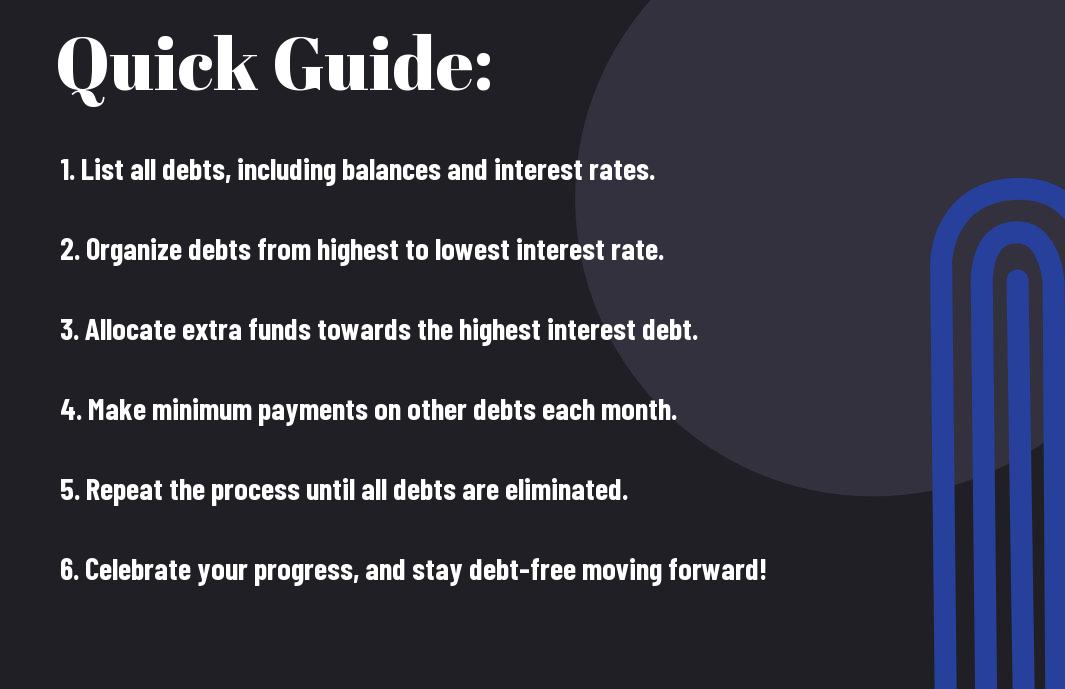
| 1. List all debts | Include balances and interest rates |
| 2. Order by interest rate | Focus on the highest interest rate debt first |
| 3. Make minimum payments | Ensure all debts are paid on time |
| 4. Allocate extra payments | Put any additional funds toward the highest debt |
| 5. Repeat until all debts are paid | Shift focus to the next highest interest rate debt |
Pros and Cons of the Debt Avalanche Method
While this method is effective for many, it's crucial to weigh both the advantages and disadvantages:
| Pro: Saves money on interest | Con: Requires discipline and patience |
| Pro: Faster debt payoff | Con: High-focus on one debt can feel discouraging |
| Pro: Encourages financial literacy | Con: May not provide quick wins |
| Pro: Improves credit score faster | Con: Initial progress can seem slow |
| Pro: Simple math | Con: May overlook emotional factors of debt |
Understanding these pros and cons will help you decide if the Debt Avalanche Method is right for your financial situation. By considering things like your patience level and financial priorities, you can tailor your approach to suit your needs. This way, you can not only pay off your debts but also build a framework for lasting financial stability.
Tips for Successful Debt Management
Unlike other popular methods, effective debt management requires a structured approach to ensure you stay on track. To enhance your efforts, consider these strategies:
- Create a detailed budget to monitor your income and expenses.
- Set realistic financial goals and milestones to motivate you.
- Communicate with your creditors to explore possible payment plans.
- Regularly review your progress and adjust your strategies as needed.
Assume that consistency and discipline will transform your financial landscape over time.
Additional Strategies to Complement the Debt Avalanche
Once again, while the Debt Avalanche Method serves as a powerful foundation for eliminating your debt, incorporating additional strategies can enhance your approach. You might consider creating a budget that prioritizes debt payments while allowing for necessary expenses. Also, look into negotiating lower interest rates or consolidating debts to streamline payments. Exploring methods like the snowball approach can provide psychological victories alongside the avalanche technique. For more insights, check out How to Use the Debt Avalanche Method to Pay Off Debt to further guide your journey towards financial freedom.
Common Pitfalls to Avoid
Keep your focus sharp to avoid common pitfalls that can derail your debt avalanche strategy. One major mistake is straying from your budget; ensure you account for all expenses to stay on track. Additionally, maintain discipline when it comes to your minimum payments; failing to pay them can result in fees and increased interest. Avoid accumulating more debt during this time; resist the urge to make new purchases on credit. Lastly, don’t underestimate the power of patience; the avalanche method works over time, so stay committed even when progress feels slow.
Resources for Further Assistance
After exploring the Debt Avalanche Method, you may want to seek additional resources to enhance your debt repayment journey. Numerous online platforms offer budgeting tools, financial education courses, and debt management advice tailored to your specific needs. You can also consider nonprofit credit counseling services, which can provide personalized strategies and support. Engage with forums or communities where you can share experiences and learn from others who have successfully managed their debt. These resources can equip you with the knowledge and confidence to take control of your finances effectively.
To wrap up
To wrap up, mastering the debt avalanche method can empower you to efficiently eliminate your debt while saving money on interest. By focusing on your highest-interest debts first, you can accelerate your journey to financial freedom. Stay organized, track your progress, and celebrate your successes along the way. This comprehensive approach not only simplifies your payments but also provides a clear roadmap for you to regain control of your finances. Embrace the method with determination and watch as you conquer your debt step by step.
Q: What is the Debt Avalanche Method?
A: The Debt Avalanche Method is a debt repayment strategy aimed at minimizing the interest you pay over time. It involves prioritizing your debts based on interest rates, focusing on paying off the debt with the highest interest rate first while making minimum payments on other debts. Once the highest-interest debt is paid off, you move on to the next highest interest debt, continuing this process until all debts are eliminated.
Q: How can I effectively implement the Debt Avalanche Method?
A: To implement the Debt Avalanche Method effectively, start by listing all your debts along with their respective interest rates. Then, organize them from highest to lowest interest rates. Allocate any extra funds you have each month toward the debt with the highest interest while continuing to make minimum payments on the others. Track your progress regularly to stay motivated and adjust your plan as necessary based on changes in your financial situation.
Q: Are there any advantages of the Debt Avalanche Method over other debt repayment strategies?
A: Yes, the Debt Avalanche Method offers significant advantages compared to other strategies like the Debt Snowball Method, primarily in terms of interest savings. By prioritizing high-interest debts, borrowers can reduce the total interest paid over time, leading to becoming debt-free sooner. Additionally, this method may provide a more logical approach for individuals focused on minimizing costs rather than purely psychological wins, as it allows for a more efficient allocation of financial resources.


0 Comments