With the Goods and Services Tax (GST) becoming an integral part of the Indian taxation system, understanding the registration process is necessary for you and your business. This post provides a comprehensive checklist of the documents you need for GST registration. Whether you are an individual or a business owner, having the right documents ready will streamline your registration process, ensuring compliance and avoiding potential delays. Let’s investigate into the necessary requirements to get you on the right track.
Understanding GST Registration
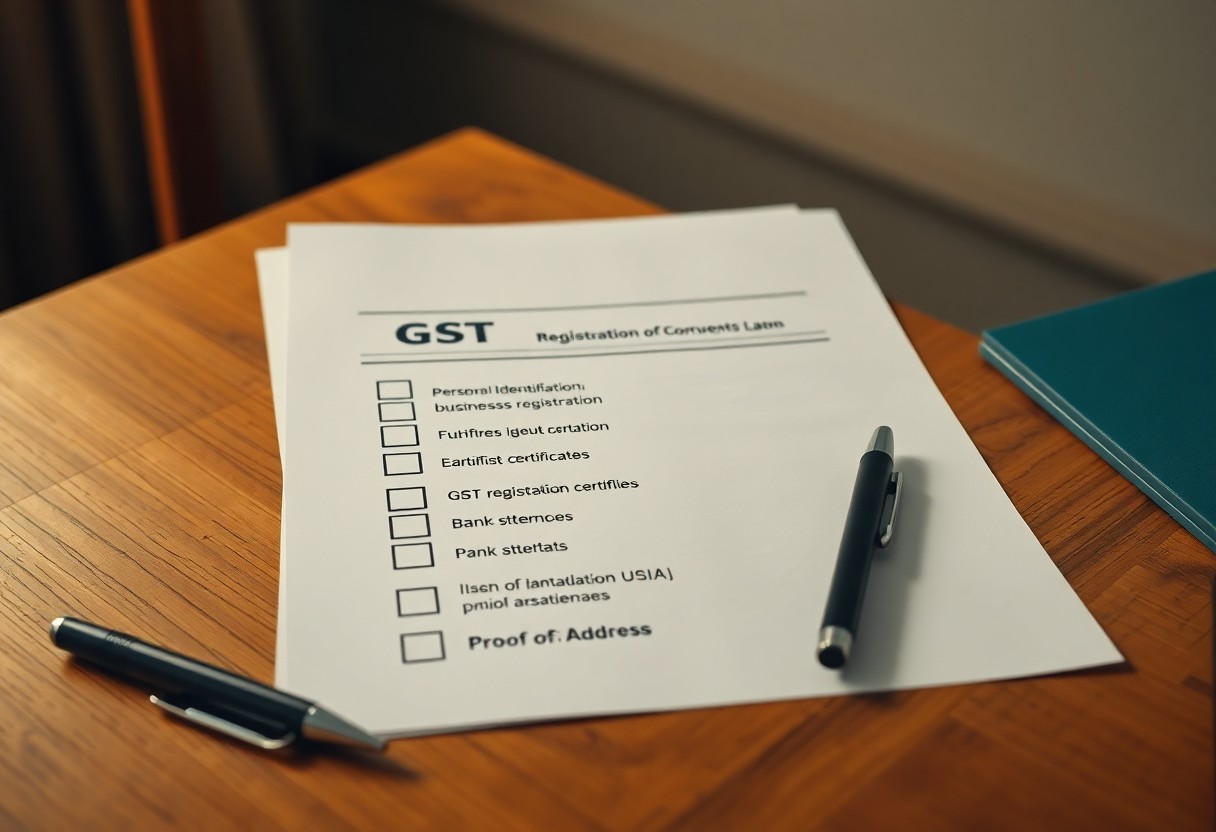
As you navigate through the complexities of Goods and Services Tax (GST), understanding the registration process is imperative for both individuals and businesses. GST registration is a legal requirement for certain taxpayers, enabling them to collect tax on behalf of the government. To help you with this process, you can refer to the GST- Registration Documents and Checklist, ensuring you have all necessary documents in order.
Importance of GST Registration
Importance of GST registration cannot be overlooked, as it legitimizes your business and allows you to comply with tax regulations. Moreover, registering under GST enables you to avail input tax credits, enhancing your overall profitability. It also paves the way for seamless inter-state transactions, which can significantly expand your market reach.
Who Needs to Register for GST?
For anyone engaged in supply of goods or services, understanding who needs to register for GST is imperative. Specific criteria, including turnover limits and types of services offered, determine whether you are required to register.
Registering for GST is necessary if your annual turnover exceeds the specified threshold limit set by the government. Additionally, businesses engaging in inter-state supply, e-commerce sellers, and certain professionals also need to register. Understanding the requirements for your particular situation ensures that you remain compliant and avoid any penalties associated with non-registration.
Documents Required for Individuals
Some imperative documents need to be gathered for GST registration as an individual. These documents ensure that your application is processed smoothly and verifies your identity and residence. Being prepared with the necessary paperwork will help you navigate the registration process effectively.
Personal Identification Documents
To initiate your GST registration, you must provide valid personal identification documents. This may include your Aadhaar card, PAN card, or voter ID, which serve to establish your identity in the registration process.
Address Proof Requirements
Requirements for address proof vary, but commonly accepted documents include utility bills, bank statements, or rental agreements. These documents should reflect your name and the address you intend to register for GST.
Hence, it is important to ensure that the address proof documents are recent and clearly indicate your name and residence. Utility bills or government-issued documents that are not older than three months are typically preferred, as they help substantiate your current address and simplify the registration process. Always verify that these documents comply with GST guidelines to avoid any delays.
Documents Required for Businesses
To ensure a seamless GST registration process for your business, you will need to gather several important documents. These include your business registration certificate, identity proof of the owners, and proof of business address. For a comprehensive understanding of what’s required, refer to the Check-list of Documents Required For GST Registration.
Business Registration Documents
Behind every successful GST registration is the need for solid business registration documents. You must present your business registration certificate, which proves the legitimacy of your business, along with details of the partners or proprietors involved. This establishes the identity and structure of your business for the GST authorities.
Financial Statements and Tax Returns
By providing your financial statements and previous tax returns, you can showcase the financial health of your business. These documents serve as evidence of your income and expenses, aiding the GST department in verifying your tax obligations.
Understanding your financial statements and tax returns is important for GST registration. You should submit your income statements, balance sheets, and any supporting documents that reflect your overall financial status. This not only provides transparency to the authorities but also helps in determining your GST compliance accurately.
Special Cases and Additional Documents
All businesses may encounter special cases that require additional documentation for GST registration. Depending on the structure and operations of your business, you might need to provide extra information to ensure compliance with regulations. This can include different proof of identity, business registration certificates, or partnership deeds, so it’s crucial to understand your specific requirements.
Proprietorships and Partnerships
Among the additional documents you may need for GST registration are the PAN card of the owner, proof of business address, and any partnership deed if you are operating as a partnership. If your business is a proprietorship, you might also need to submit a trade license or GST certificate if you’ve previously registered.
Corporations and Limited Liability Companies
Special cases for corporations and Limited Liability Companies (LLCs) may require documentation such as the Certificate of Incorporation, Memorandum and Articles of Association, and a PAN card for the company. These documents help establish the legal identity and structure of your business, ensuring that you meet the prerequisites for GST registration.
And, when registering a corporation or LLC for GST, you should also consider providing details of the board of directors or partners, as well as any resolutions authorizing the GST registration. This extra information plays a significant role in demonstrating the legitimacy and operational structure of your business to the GST authorities.
Common Mistakes to Avoid
After gathering the necessary documents for GST registration, it's important to be aware of common pitfalls that could delay the process. Ensuring a smooth registration requires attention to detail and thoroughness, so you can avoid unnecessary complications. Being informed about these mistakes will help you submit your application successfully and minimize potential errors in your registration process.
Incomplete Document Submission
To avoid issues during your GST registration, ensure all necessary documents are submitted in full. Incomplete submissions can lead to delays in processing your application, requiring you to resubmit documents and causing further setbacks. Double-check your checklist to confirm you have included every required document.
Mismatched Information
Below are the consequences of any discrepancies in your submitted information. Mismatched names, addresses, or other details between your documents can raise red flags during the verification process. This can result in rejection or delays, necessitating corrections that can prolong your GST registration unnecessarily.
Considering that any mismatched information can lead to significant setbacks, take the time to verify that all your details are consistent across different documents. For instance, ensure that the name on your PAN card matches with your application and any other IDs you provide. This attention to detail will help ensure a smoother registration experience and facilitate quicker approval from GST authorities.
Frequently Asked Questions
Now that you have a better understanding of the GST registration documents required for individuals and businesses, you may have some questions. This section aims to address common queries that arise during the registration process, helping you navigate any uncertainties and facilitating a smoother experience.
How Long Does the Registration Process Take?
Among the various factors that can affect the duration of the GST registration process, you can generally expect it to take anywhere from three to seven working days. However, this timeframe may vary based on the completeness of your documentation and the specific guidelines of your local GST office.
What to Do If Documents Are Missing?
Long before you initiate your GST registration, ensure you have all the necessary documents. However, if you find that some documents are missing after you've started the process, you should immediately compile the required paperwork. You can contact your GST consultant or the tax office for guidance on how to proceed without delays.
Frequently, missing documents can lead to complications in your GST registration process. To avoid any setbacks, it’s beneficial to maintain open communication with the GST office. They can advise you on alternative options, such as a provisional registration or ways to expedite the process, allowing you to submit your application as quickly as possible.
To wrap up
Drawing together all the information provided, understanding the necessary GST registration documents is vital for both individuals and businesses looking to comply with tax regulations. Your checklist should typically include proof of identity, address verification, and business-related documents. Ensuring you have all the correct documentation not only streamlines the application process but also helps you avoid potential delays and complications. By being well-prepared, you can navigate through your GST registration with greater ease and confidence.
FAQ
Q: What are the imperative documents required for GST registration for individuals?
A: Individuals applying for GST registration need to provide proof of identity, which can include an Aadhaar card, passport, voter ID, or driver’s license. Additionally, a recent passport-sized photograph is required, along with proof of address such as a utility bill, rental agreement, or property deed. If the individual is a sole proprietor, a bank account statement under the same name may also be necessary.
Q: What documents do businesses need for GST registration?
A: Businesses require various documentation for GST registration, including their PAN (Permanent Account Number), proof of business registration (trade license or certificate of incorporation), a bank account statement, and the address proof for the business location. Furthermore, if the business has multiple locations, additional registration documents for other branches might be needed.
Q: Is there a specific format for submitting GST registration documents?
A: There isn't a strict format for the documents submitted, but they should be clear and legible. Most documents can be provided in scanned copies. It's crucial to ensure that all documents are verified for authenticity and completeness before submission to avoid any delays in processing the GST registration application.
Q: Are there any additional documents required for special categories of businesses?
A: Yes, businesses falling under special categories may require additional documentation. For example, e-commerce operators will need to provide details of their sellers or service providers, while businesses involved in the import/export of goods may need to show import/export codes. Additionally, companies providing services of a specific nature may require licenses relevant to their industry.
Q: How can I verify that my GST registration application has been successfully submitted?
A: After submitting your GST registration application, you will receive an application reference number (ARN) via email or SMS. You can use this ARN to track the status of your application on the GST portal. The GST authorities will also communicate directly regarding the approval or any issues with your submitted documents.
Disclaimer:
This blog post is intended for informational and
general educational purposes only and does not constitute professional advice
in accounting, finance, tax, or legal matters. While efforts have been made to
ensure the information is accurate and up to date, financial laws, tax
regulations, and compliance


0 Comments