Many businesses today are navigating the complexities of the Goods and Service Tax (GST) Eway Bill process, which is vital for the seamless transportation of goods. Understanding the nuances of this process is vital for ensuring compliance and avoiding penalties. In this blog post, you will learn about the Eway Bill requirements, its generation, and its relevance in the GST framework, empowering you to manage your logistics effectively and with confidence.
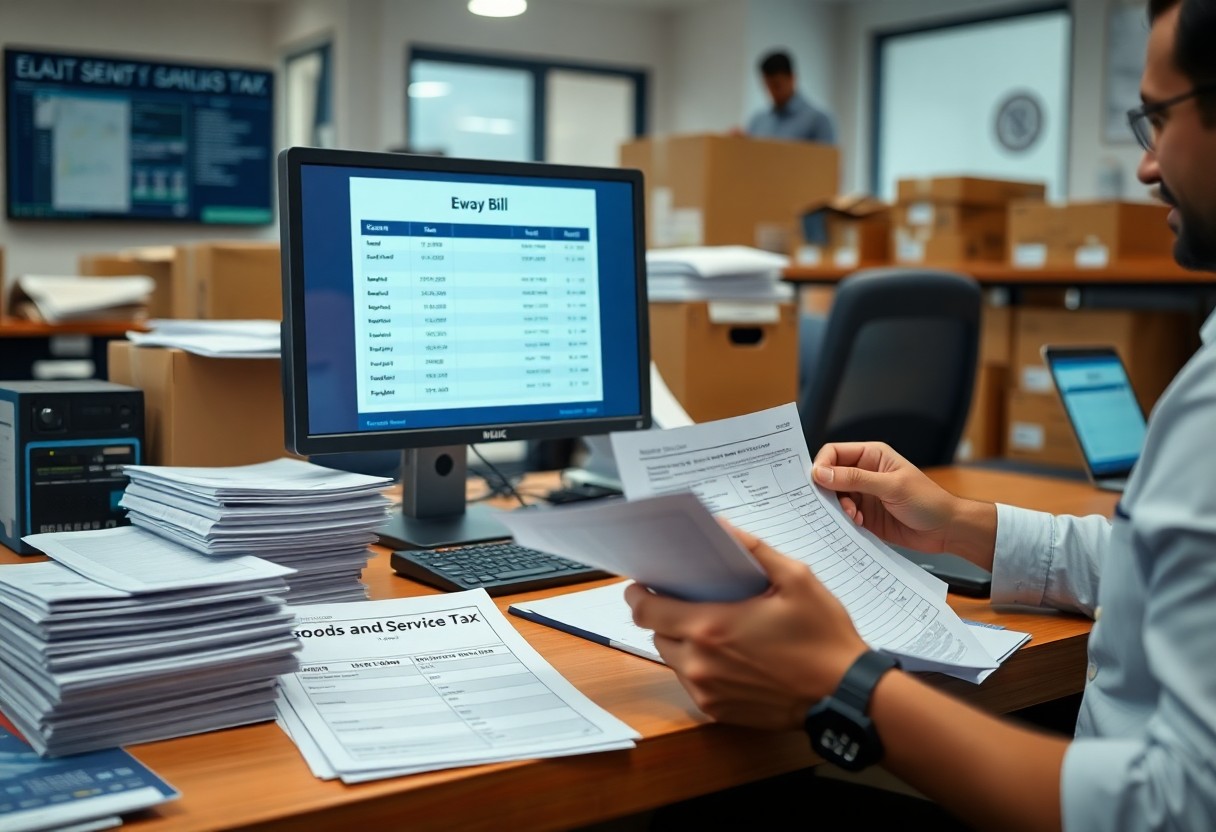
The Eway Bill: A Necessary Component of GST Compliance
What is the Eway Bill and Why Does it Matter?
The Eway Bill serves as an electronic permit for the movement of goods valued over ₹50,000 within India, facilitating seamless transit across state borders. Using the Eway Bill system not only helps you maintain compliance with GST regulations but also reduces tax evasion. When transporting goods, you must generate this bill from the GST portal to ensure that your shipments are recognized as legitimate, helping you avoid penalties and legal issues.
Legal Framework Surrounding the Eway Bill under GST
The Eway Bill operates under the legal framework established by the Goods and Services Tax Act, specifically Sections 68, 69, and 138 of the CGST Act. According to these provisions, you are mandated to transport goods accompanied by an Eway Bill, detailing the consignment. Failing to comply with these regulations can result in fines, confiscation of goods, or other penalties, emphasizing the importance of adhering to the stipulated guidelines.
This legal framework also lays down the responsibilities of the supplier, recipient, and transporter in the Eway Bill process. For instance, it dictates that the Eway Bill must be generated before the commencement of movement and must specify relevant details such as the GSTIN of the supplier, the recipient, and the transporter's details. Moreover, it outlines the penalties for non-compliance, making it imperative for you to understand these laws not just to avoid punitive measures but to ensure a smoother operation of your business logistics. By staying informed about the evolving legal landscape surrounding Eway Bills, you mitigate risks and enhance your compliance posture within the GST ecosystem.
Navigating the Eway Bill Portal: Step-by-Step Guide
| Step | Description |
|---|---|
| User Registration and Login Process | Complete the necessary registration on the Eway Bill portal, enabling you to create and manage Eway Bills. |
| Creating and Validating an Eway Bill | Input the required details to generate an Eway Bill and ensure all information is correctly validated before submission. |
User Registration and Login Process
To start using the Eway Bill portal, you need to register. This entails providing your GSTIN and creating a unique username and password. Once registered, you can log in anytime to access your account. An email or SMS confirmation will be sent upon successful registration to help you keep track.
Creating and Validating an Eway Bill
Generating an Eway Bill requires entering specific details regarding the goods being transported, such as their value, quantity, and the recipient's GSTIN. After providing all necessary information and ensuring its accuracy, you can validate and submit to get your Eway Bill.
The process of creating and validating an Eway Bill involves several fields that must be filled meticulously to avoid errors. After entering information such as the invoice number, transport mode, and vehicle details, it’s advisable to double-check each entry. Validation is achieved through checks in the system to ensure compliance with GST regulations, and any discrepancies can disrupt the billing process, potentially leading to penalties. Thus, accuracy and completeness are paramount in this step to ensure smooth transportation of goods.
Common Pitfalls in the Eway Bill Process and How to Avoid Them
In navigating the Eway Bill process, various pitfalls can impact compliance and efficiency. Common challenges include frequent errors in data entry, misunderstanding transit rules and regulations, and not keeping abreast of changes in GST, all of which can lead to delays and penalties. To ensure a smooth process, familiarize yourself with comprehensive resources, such as How to Generate E-Way Bills? - Step-by-Step Tutorial, that elaborate on effective practices and regulations.
Frequent Errors in Data Entry
Data entry mistakes are among the most frequent issues encountered in the Eway Bill process. Common errors include incorrect vehicle numbers, mismatched product codes, and wrong taxpayer identification numbers. Such inaccuracies can lead to compliance issues and potential fines. Double-check all entered details before submission to minimize these risks.
Misunderstanding Transit Rules and Regulations
Misinterpretations of transit rules can result in non-compliance. Ensure that you are fully aware of the specific rules regarding the duration of the Eway Bill's validity and the allowed routes for transportation. Failing to adhere to these regulations can cause significant delays and legal issues during the movement of goods, leading to a halt in business operations.
A thorough understanding of transit rules and regulations is necessary for smooth logistics. Each state may have unique requirements that dictate the routes through which goods can be transported. Be aware of factors such as the type of goods being transported, the distance, and specific state regulations which may impose additional restrictions or requirements. Regularly review the latest updates regarding these rules to avoid unexpected penalties or delays.
Analyzing the Impact of Eway Bills on Supply Chain Efficiency
Eway Bills have significantly transformed supply chain operations by optimizing logistics through enhanced tracking and compliance mechanisms. Businesses leveraging Eway Bills experience streamlined processes that minimize disruptions, resulting in faster deliveries and improved customer satisfaction. The ability to monitor goods in real-time allows shippers to make informed decisions, ultimately enhancing operational efficiency and reducing costs associated with delays and penalties.
Streamlining Movement of Goods and Reduced Delays
The introduction of Eway Bills has led to faster movement of goods across state borders by simplifying the documentation process. With the electronic tracking system, you can effectively reduce waiting times at checkpoints, as authorities can verify compliance swiftly. Consequently, this leads to fewer bottlenecks in transit, allowing shipments to reach their destinations more reliably and promptly.
Implications for Stakeholders in the Logistics Industry
Stakeholders in the logistics industry must adapt to the Eway Bill system, as it has reshaped traditional operational models. Compliance with the Eway Bill mandates can lead to improved efficiencies for transporters, warehouses, and manufacturers alike. However, you will need to invest in training, technology, and streamlined processes to fully leverage the benefits, ensuring that your operations remain competitive and legally compliant within this evolving landscape.
For logistics providers and transporters, the Eway Bill system necessitates a shift towards technology-driven solutions to manage documentation effectively. Investing in software solutions that integrate Eway Bill compliance with existing logistics management systems can enhance tracking, visibility, and reporting. This integration not only boosts efficiency but also ensures that you remain agile and ready for the ever-evolving regulatory landscape. Furthermore, understanding the compliance requirements and adapting your operational strategies can mean the difference between gaining a competitive edge and facing regulatory penalties.
Future Trends in Eway Bill Implementation and Technology
The evolution of technology continues to reshape the Eway Bill process, enhancing its efficiency and compliance. The integration of real-time data analytics and blockchain is poised to streamline operations, minimizing discrepancies and ensuring transparency in transactions. As businesses adapt to emerging technologies, the future of Eway Bill implementation looks promising, paving the way for a more automated and responsive system.
The Role of Automation and AI in Eway Bill Generation
Automation and AI are transforming the Eway Bill generation process, allowing for rapid data entry and reducing human error. Advanced algorithms can analyze vast amounts of data instantaneously, identifying compliance patterns and flagging anomalies for review. This not only expedites the bill generation process but also enhances your overall operational efficiency, enabling you to focus on strategy rather than paperwork.
Upcoming Legislative Changes and Their Potential Impact
Anticipated legislative changes concerning the Eway Bill framework may introduce new compliance requirements or modify existing operational guidelines. Staying informed about these shifts is crucial for your business to remain compliant and avoid potential penalties. Understanding the implications of these changes, such as stricter timelines or expanded documentation obligations, can help you strategize accordingly and optimize your logistics processes.
The upcoming legislative landscape surrounding Eway Bill regulations is expected to include provisions that strengthen compliance measures, potentially introducing increasing penalties for non-compliance. As authorities demand higher standards of accountability, businesses may need to invest in updated systems and staff training to meet these enhanced requirements. Keeping abreast of these changes will not only help safeguard your operations but also allow you to adapt swiftly, ensuring uninterrupted business transactions while maintaining full compliance with the law.
Conclusion
Considering all points, understanding the Goods and Services Tax E-Way Bill process is imperative for smooth business operations. It is important for you to stay compliant and ensure that all necessary documentation is handled correctly during transportation. By following the guidelines laid out, you can efficiently manage your shipping logistics and avoid any potential penalties. For a comprehensive understanding, refer to this E-Way Bill Guide: Rules, Generation Process, and Integration.
FAQ
Q: What is the Eway Bill and why is it necessary in the Goods and Service Tax (GST) regime?
A: The Eway Bill is a document required for the movement of goods exceeding a certain value, issued under the Goods and Service Tax (GST) framework. It serves as proof that the goods being transported have been duly accounted for and comply with tax regulations. An Eway Bill maintains transparency in the supply chain, helps prevent tax evasion, and facilitates the smooth movement of goods across state borders.
Q: How do I generate an Eway Bill?
A: To generate an Eway Bill, you need to visit the GST portal or use the Eway Bill mobile application. You will need details such as the GSTIN of the supplier and recipient, invoice number, date, and value of the goods being transported. After entering these details, you will receive a unique Eway Bill number (EBN) which must accompany the goods during transit.
Q: How long is an Eway Bill valid for, and does the validity change based on distance?
A: The validity of an Eway Bill is determined by the distance the goods are to be transported. Generally, it is valid for 1 day for distances up to 100 km. For every additional 100 km (or part thereof), the validity increases by 1 day. This means, for example, if the distance is 250 km, the Eway Bill will be valid for 3 days from the time of generation.
Q: What information should I provide when raising an Eway Bill cancellation?
A: When cancelling an Eway Bill, you must provide the Eway Bill number and the reason for cancellation. It is important to note that the cancellation must be performed within 24 hours of generation. After successful cancellation, the Eway Bill will no longer be valid, and you can generate a new one if needed.
Q: What happens if I fail to carry an Eway Bill during transportation?
A: Failing to carry a valid Eway Bill during the transportation of goods can lead to penalties and legal action under GST laws. The authorities may impose fines or detain the goods until the proper documentation is provided. It is advisable to always ensure that the Eway Bill is generated and available during the transportation process to avoid any compliance issues.
Disclaimer:
This blog post is intended for
informational and general educational purposes only and does not constitute
professional advice in accounting, finance, tax, or legal matters. While
efforts have been made to ensure the information is accurate and up to date,
financial laws, tax regulations, and compliance requirements vary by country
and may change over time. You should consult a qualified financial advisor,
accountant, or legal professional in your local jurisdiction to obtain guidance
specific to your situation. The author and publisher assume no responsibility
or liability for any loss or damage resulting from the use of the information
provided herein.


0 Comments